Why many immigrants struggle most with selling themselves?

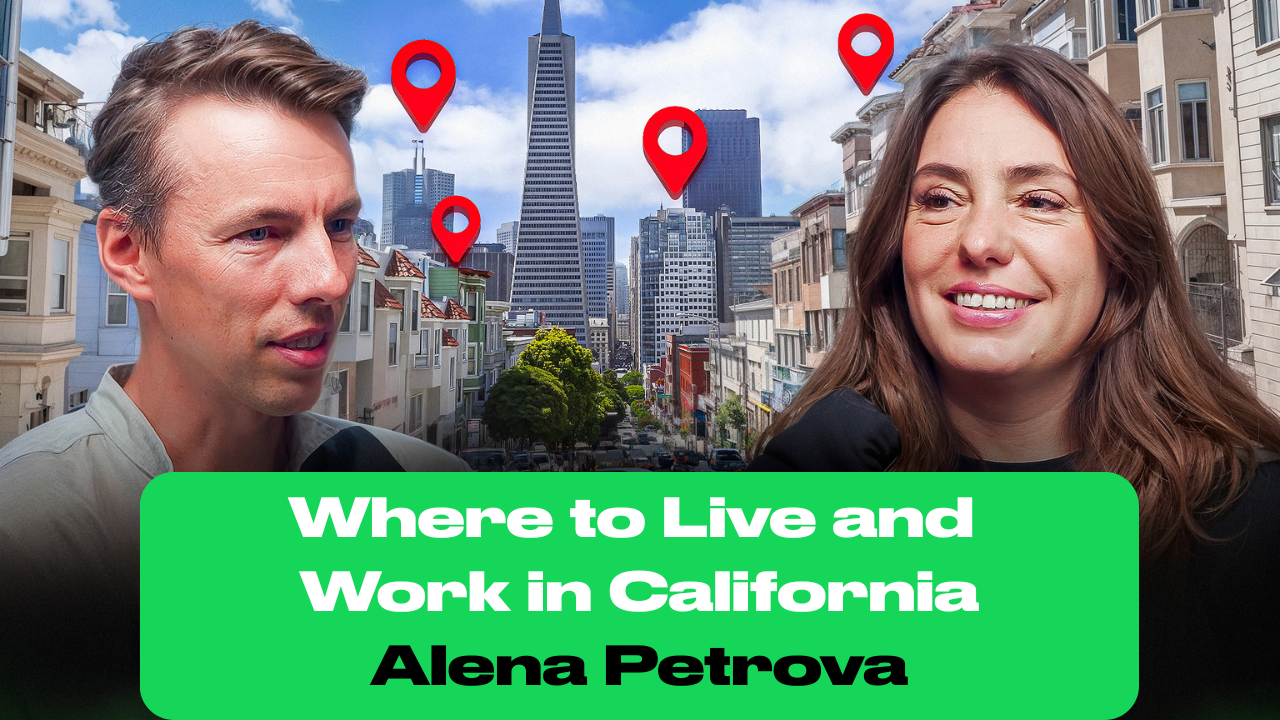
In this conversation, I speak with Alena Petrova about moving to the United States, adapting to Silicon Valley, building a business, raising investments — and why many immigrants struggle most with selling themselves.
Below are her honest answers — from the realities of co-living life to the inside workings of a venture fund.
The Road to America: Accident or Destiny?
How did you end up in the U.S.? Was it a planned move?
I never planned to emigrate. One night I had a dream that I should go to America — and it turned out my tourist visa was still valid, but about to expire. I woke up, bought a ticket, and flew out two days later. I thought I was coming for a two-week trip — New York, Washington, Philadelphia, and then San Francisco.
I never left San Francisco. The other tickets went unused, and my luggage was shipped later. That’s how my journey here began.
Starting Over: From One Suitcase to a New Life
What did you have to “break” or rebuild in yourself for a new life in Silicon Valley?
It wasn’t so much breaking as reassembling myself from scratch. Attachments to status, comfort, and familiar beliefs — all of that had to be reset. I didn’t know a single person here; I built my environment, business, and daily life from zero. It affected every layer of my reality.
What everyday challenges were the hardest?
At first, I lived in a co-living space and worked in a coworking hub — shared bathrooms, one tiny room, and an English level that I thought was good but failed me with local accents. Having my own apartment and private shower later felt like a real victory.
Work, Business, and the Choice: Employment or Startup
How did you decide between getting a job and starting a business in the U.S.?
I’ve always been an entrepreneur. A few times I considered employment — stable income, corporate benefits — but picturing myself in a corporate role caused almost physical resistance. I opened a consulting agency here and continued my project Unicorn Factory, which helps founders with growth, networking, and fundraising.
What exactly is Unicorn Factory?
Unicorn Factory is a gateway into the Valley: events, networking, fundraising support, marketing and PR for the U.S. market, plus legal and accounting guidance. It grew naturally out of my event background and work with investors.
Yellow Rocks: How the Fund Invests
Tell us about Yellow Rocks — your focus and investment stages.
Yellow Rocks is a venture fund investing at early stages — Pre-Seed, Seed, and Series A. We focus on fintech, edtech, AI, B2B SaaS, and other software solutions.
We run a Pre-Seed to Succeed program together with three partner funds. Decisions are fast — the investment committee meets weekly. Check sizes range from $200 K to $2 M, and for the pre-seed program — typically $300–500 K.
Would you invest if the founder only has a “red passport” and a tourist visa?
We’re open to global founders regardless of nationality. Initially, we focused on Russian-speaking founders, but later expanded geographically. The key factor is a global mindset and a strong, committed team. We don’t invest in projects aimed solely at the Russian market.
Immersion Tours to Silicon Valley: Who They’re For
How do your Valley tours work, and what do participants gain?
We run a one-week immersion program priced at $6,900 — a packed schedule from 8 a.m. to 10 p.m. with investor meetings, corporate visits, tech-team sessions, and hands-on pitching workshops.
For founders, we also have shorter programs (up to $5,000) designed to connect them with the local community, meet investors, and refine their pitches.
Do such trips help people decide whether to move?
Yes. Typically, two or three participants from each group end up staying in the U.S. or relocating their business here. Experiencing the atmosphere firsthand is worth more than a dozen stories. After these tours, many begin preparing their documents and taking real action.
Main Challenges for Immigrants — and Practical Tips
What prevents immigrants from the CIS region from succeeding in the U.S.?
The biggest issue is self-underestimation and weak soft skills. We’re strong in hard skills but often lack self-presentation, communication, and sales abilities.
In the Valley, vision and ambition often matter more than money — investors watch how boldly you think.
What practical advice would you give to founders entering the U.S. market?
- Strengthen your communication and self-presentation skills.
- Immerse yourself — visit for a few days just to feel the vibe.
- Build an international team and think globally.
- Don’t fear changing your approach and learning the American pitching style.
Community, Support, and the Art of Recharging
How do you restore energy and who do you share your personal side with?
Nature fuels me: fifteen minutes by the ocean or a quick hike among redwoods recharges me completely. The second source is deep, heartfelt conversations with close friends here. Family support from afar became even more valuable, though contact with my past social circle naturally decreased.
Are you planning to develop the Russian-speaking community in the Valley?
Yes. I’m working on a club for Russian-speaking residents of the Valley — focused not only on business but also creativity, health, and personal growth. The idea is a warm, ongoing community with rotating locations across the Bay Area.
If anyone has ideas, venues, or resources — I’d love to collaborate.
Quick Fire Round
Where would you recommend moving to in the U.S.?
Silicon Valley and San Francisco — definitely. If your goal is business growth and fundraising, choose San Francisco. If you’re relocating with family — the Valley is better.
When is the right moment to move?
When staying becomes impossible — when you wake up at night and just know it’s time to buy a ticket.
Should you start a business or get a job?
For most people, a job makes more sense — stability and benefits.
But if you’re entrepreneurial by nature, build your own — just understand the risks and differences of the U.S. market.