Interview with Marina Morgan, the Cost of Leadership

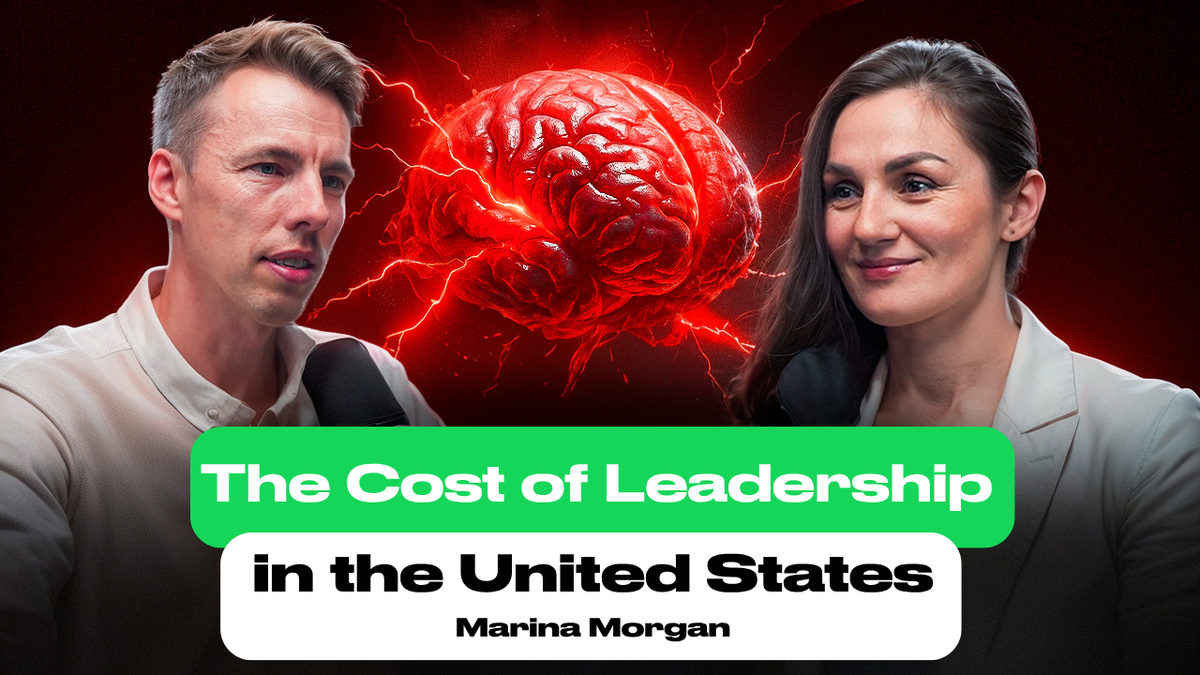
Marina Morgan is a psychologist, executive coach, and researcher of the neurophysiology of entrepreneurship. In this conversation, she explains why successful founders often hit psychological crises, how mental state shapes business outcomes, and what leaders can do to stay productive and clear-minded in the age of AI.
How did you get into this work, and why did you move to the U.S.?
I’ve been working with talent and leadership for a long time — since university I built my own projects and later held roles in major tech and media companies. One of the ideas — validating our Karma Framework for agile IT team management — brought me to Silicon Valley. The first thing that struck me here was the boldness, freedom of thought, and the infrastructure that encourages experimentation. I realized: this is where I want to build my next chapter and shift my focus to working with founders and their teams.
What is “neuroentrepreneurship,” and why do entrepreneurs face mental-health challenges more often?
Neuroentrepreneurship is the study of entrepreneurship through the lens of neurophysiology. Entrepreneurs often have a different pattern of neural connectivity: they see more possible solutions and have a stronger dopamine response to big ideas. It gives them “superpowers” for innovation, but it also increases the risk of dysregulation — anxiety, manic episodes, and so on.
Some U.S. studies show that founders are significantly more likely to fall within the bipolar spectrum (around 11% vs. ~1% in the general population). It explains both their drive and their vulnerability.
What are the main challenges founders come to you with?
I would highlight five:
- Identity fusion with the business. When the company struggles, the founder feels it as a personal failure.
- Loneliness and stigma. It’s hard for entrepreneurs to ask for help — family and teams rarely understand, and society expects them to be “strong.”
- Loss of meaning and motivation. After the initial sprint, there’s a plateau where energy drops.
- Co-founder conflicts. Visionaries and technical founders have neurologically different thinking styles — misunderstandings become chronic if this isn’t recognized.
- A gap between strategy and culture. Stated values and everyday behaviors often don’t match — and this silently drains the business.
What should a founder do when the spark is gone — when nothing feels energizing anymore?
First — don’t skip the basics. Get a medical checkup: iron levels, vitamins, hormones, sleep. All of these directly influence mood and adaptability. Psychology is inseparable from physiology — without a stable neurophysiological baseline, coaching and strategy work will be less effective.
Next — practices that truly work:
- Integrate pleasure as a value. Make a list of 50–100 small things that give you genuine joy (a “whole-body yes”).
- Book 5–10 minutes a day for one of those joys — it’s not indulgence, it’s resilience.
- Protect your sleep — REM and deep sleep drive neuroplasticity.
- Watch your nutrients — healthy fats, glucose/ketone balance, brain-fueling foods.
- Add novelty to movement — dance, martial arts, or any complex coordination work. Novel motion builds new neural pathways.
How should founders choose the right coach or advisor?
Key criteria:
- Neurophysiological foundation. I don’t trust specialists who don’t understand how the brain works — it can be harmful to “inspire” someone who is physiologically depleted.
- Real cases and results. Ask for proof — who they worked with and what changed.
- A multidisciplinary partner network. A good coach has clinicians, psychiatrists, and nutritionists they can bring in when deeper support is needed.
- Start with a checkup. Before deep coaching, evaluate physical baselines — fix deficiencies first.
What support programs exist for founders facing serious mental-health issues?
There are organizations that consolidate services for entrepreneurs whose challenges go beyond coaching. In the U.S., there are hotlines and specialized programs (some are my partners), but psychiatric care remains underdeveloped — a systemic issue. That’s why private initiatives and peer-support communities among founders are essential.
How do delegation and trust influence AI adoption inside a company?
A leader’s delegation style directly correlates with the depth and speed of AI integration. Those who fear losing control limit themselves to minimal use cases — and lose potential value. Leaders who are open to experimentation scale solutions faster and gain strategic advantage.
What is AIQ, and why does a leader need it?
AIQ is my model for assessing a company’s human-side readiness for AI integration: leadership skills, team expectations, adaptability, culture, ethics, operational maturity, and more.
After analyzing thousands of studies, we found a consistent pattern: the lower the unrealistic expectations, the higher the success rate of implementation. Another strong predictor: leaders with empathy and high emotional intelligence — they are better at building collaborative human-AI workflows.
Do all leaders need to learn how to work with AI? How should they prepare for changes in the job market?
Yes — adaptation is inevitable. Millions of roles will disappear, and tens of millions will be created. The path forward is continuous learning and cognitive flexibility.
More important than technical skills is the ability to form new neural connections and maintain the physical resources (sleep, nutrients, movement) that make learning possible.
Leaders must become role models — if they don’t understand how AI works and how to use it, the team loses direction.
What habits have helped you personally stay adaptable and manage stress?
Three fundamental ones:
- Sleep quality. Track and protect your sleep phases.
- Nutrients and energy. Check vitamins, iron, macronutrients; healthy fats and ketones matter for cognitive performance.
- Novelty in movement. New motor patterns stimulate neuroplasticity — partner dancing, martial arts, or coordination exercises, even 20–30 minutes a week, make a difference.
What would you advise an immigrant leader in Silicon Valley?
Accept that the culture here is different: openness, entrepreneurial boldness, less hierarchy. Build trust in the local network, stay curious, and don’t be afraid to experiment.
Most importantly — protect yourself. If you are the main driver of the company, your resilience is your most valuable business asset.
You also work with culture and opera. How does that relate to leadership?
Philanthropy and cultural projects create a different depth of meaning. Opera is a fusion of emotion, movement, and storytelling — it develops emotional intelligence and creativity. I’m part of the revival of the New York City Opera: it’s about making art accessible and showing how culture connects generations and communities — an inspiring resource for leaders.
Practical recommendations for founders:
- Start with a full medical checkup.
- Create a list of 50–100 personal sources of joy and schedule 5–10 minutes of them daily.
- Track sleep and nutrition; experiment with glucose/ketone monitoring if needed.
- Learn to delegate — expand responsibility gradually to enable deeper AI integration.
- Choose a coach with a neurophysiology background and proven results.
Where can people find you, and what do you offer founders?
I advise founders, teams, and organizations, build AIQ frameworks for AI-readiness, and collaborate with clinicians when needed. You can reach me on LinkedIn (“Marina Morgan San Francisco”) or at themorganimpact.com. I also offer a complimentary 30-minute session to assess fit.
If you’re a leader feeling exhausted, stuck, or unsure how to delegate and adopt new technologies, start with a simple checkup and add 5–10 minutes of genuine joy into your week. It’s a small investment with long-term returns — for you and for your business.
“When you understand how your brain and your team’s brains work, decisions come quickly.” — Marina Morgan
If you want an objective assessment of your company’s AI readiness or guidance on leadership resilience, work with someone who understands the brain, the business, and the technology — all at once.